Understanding your heating system first
Before purchasing a smart thermostat, identify what type of heating system is in your home. Polish apartments built before 2000 usually connect to a district heating network (ciepłownictwo miejskie) operated by a provider such as Veolia or PGNiG Termika. Newer buildings and houses frequently use a gas condensing boiler (kocioł kondensacyjny) or a heat pump (pompa ciepła).
Smart thermostats work differently depending on the system. For district heating, control typically happens via a thermostat valve (zawór termostatyczny) on the radiator, and a smart room thermostat communicates with an actuator on that valve. For boilers, the thermostat connects directly to the boiler's relay terminals and signals when to fire.
District heating: what is actually controllable
In district-heated buildings, the incoming water temperature is set by the provider and the building's heat exchanger (węzeł cieplny). You usually cannot change that. What you can control is how much heat enters each room by opening or closing the thermostat valve on each radiator.
Smart TRV (thermostatic radiator valve) heads — such as those from Tado, Danfoss, or Homematic IP — fit on most existing radiator connections with an adapter. They measure room temperature and adjust the valve opening accordingly. A coordinator hub, usually connected by Wi-Fi, lets you schedule and remote-control them via smartphone.
Gas boiler: wiring diagram
A typical Polish condensing boiler (Vaillant, Viessmann, De Dietrich) has a two-wire room thermostat connection, usually labelled TA or OpenTherm. Most modern smart thermostats support both modes:
- On/Off (relay): The thermostat simply closes or opens a circuit. Connect to the boiler's room thermostat terminals (check the manual). Works with Tado V3+, Netatmo, and most Ecobee models with an add-on board.
- OpenTherm: A two-way protocol that lets the thermostat request a specific water temperature rather than just on/off. Supported by Tado V3+ and some Netatmo versions. This is worth using if your boiler supports it — modulating boilers run more efficiently at lower temperatures.
Always switch off power to the boiler at the fuse box before touching the wiring. If you are not confident working with low-voltage wiring, a certified installer (elektryk or instalator c.o.) can complete the connection in under an hour.
Choosing a model available in Poland
Several brands are sold through Polish retailers (Media Expert, RTV Euro AGD, Komfort) or available through Amazon.pl and official brand stores:
- Tado Wireless Smart Thermostat V3+: Widely available, cloud-dependent but with good Polish app localisation. Supports OpenTherm. The extension kit mounts inside the boiler housing and communicates wirelessly with the thermostat head.
- Netatmo Smart Thermostat: Works via relay connection. App is available in Polish. Netatmo stores scheduling data locally if the cloud is unreachable, which is useful for holiday homes.
- Homematic IP Wall Thermostat Basic: Requires the Homematic IP Access Point hub. More complex initial setup, but the entire system operates locally — no cloud dependency. Preferred by users running Home Assistant.
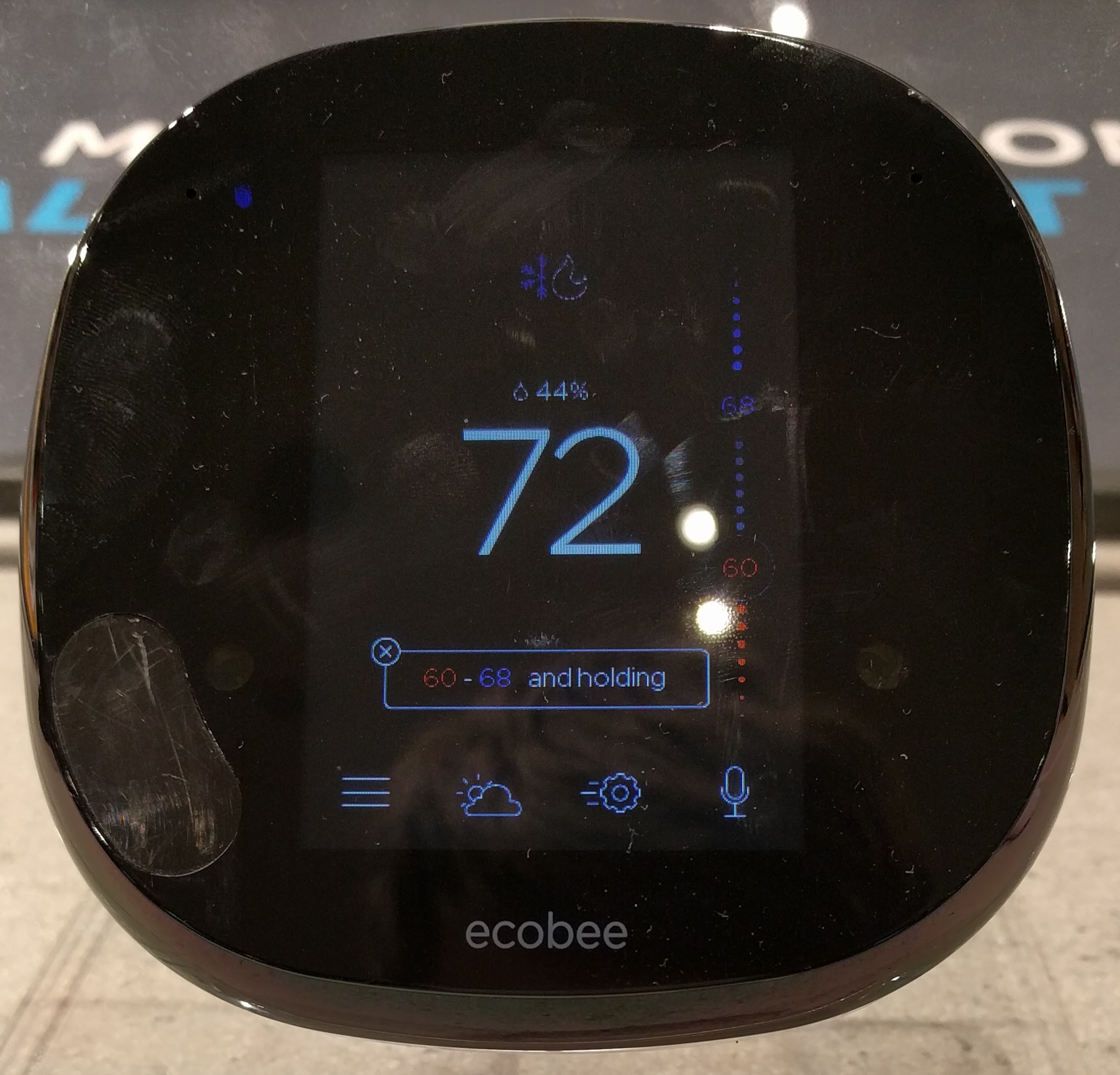
- Ecobee SmartThermostat Premium: Less common in Poland but available as an import. Excellent scheduling features and a built-in air quality sensor.

Setting up the schedule
Polish working hours and heating preferences tend to differ from UK or US patterns that manufacturer defaults assume. A common schedule for a Warsaw apartment:
- Monday–Friday 06:00–08:00: raise to 21°C before waking
- Monday–Friday 08:00–16:30: lower to 17–18°C while at work
- Monday–Friday 16:30–22:00: raise to 21°C on return
- 22:00–06:00: maintain 17–18°C overnight
- Weekend: manual override or a relaxed 20°C throughout
Most apps let you import a schedule template and adjust it. Tado's auto-assist feature (paid add-on) uses smartphone geofencing to adjust temperature based on whether anyone is home, which saves significant energy when schedules are irregular.
Geofencing and away mode
Geofencing works by detecting when all registered smartphones leave a defined area around your address. The thermostat then switches to an eco/away temperature (typically 15–16°C) automatically. When the first person returns within range, it begins warming the apartment again.
For this to work reliably: ensure location permissions are always-on in the thermostat app for each household member's phone, and that battery optimisation does not kill the app in the background. On some Android 13+ devices, you may need to add the app to the battery whitelist.
Integration with home automation
If you run Home Assistant, both Tado and Netatmo have official integrations available through the UI. Homematic IP integrates via the custom HACS component. This allows the thermostat to react to other conditions — for example, lowering temperature when a window sensor reports a window left open for more than five minutes.
Google Home and Amazon Alexa both support Tado and Netatmo for voice commands. At the time of writing, Polish-language voice commands for temperature control work reliably on both platforms.
Common issues and fixes
- Thermostat shows correct temperature but boiler does not fire: Check that the relay or OpenTherm wiring matches the boiler's terminal labels. Some Vaillant models use a bridge jumper that must be removed before connecting a thermostat.
- Radiator does not get warm after installing a smart TRV: The TRV head may be installed on the wrong adapter. Most Polish radiators use M30×1.5 connectors, but older Purmo radiators sometimes use a different thread. Check the adapter kit included in the box.
- App shows offline even with Wi-Fi connected: Smart thermostat hubs typically need a 2.4 GHz network. If your router only advertises a single SSID for both bands, temporarily disable the 5 GHz radio during setup.
External references: Home Assistant Tado integration • Tado Poland